Showing posts with label Pubs: Carlisle - Moo Bar. Show all posts

Friday, 30 January 2015

Into Carlisle on the Cumbria Way: 24th January 2015

The weather forecast was pretty decent this weekend (we were between #ScotStorm2 and the #PolarVortex) so that meant I could get out for a longish walk, possibly my only chance for a while with some family commitments and the 6-Nations rugby coming up in the next few weeks. With Carlisle such an easy place to get to from Glasgow I thought I could head out to the south-west of the city to find an interesting 'Cheese Farm', visit a couple of pubs and then walk back into Carlisle along the Cumbria Way.


Outward travel was as follows:-
  Train: Glasgow Central to Carlisle (08:40, 09:40 - Virgin Trains)
  Bus: Carlisle Bus Station to Crofton Estate (00 on the hour - 554 Stagecoach Cumbria)

The bus from Carlisle took me out from the city centre bus station and through the small village of Thursby (where it stopped outside a lovely pub, The Ship Inn) and then continued out on the road to Wigton. I managed to choose the correct bus-stop for the Crofton Estate and then headed south down the narrow track amidst the flat (and very green) farmlands of the Solway plain (complete with associated 'aromas'). About a mile or so on I came to the small fishing 'ponds' of Crofton Lake and it was here that there was a sign pointing me to a Cheese Farm - this was definitely promising.

Also set in amongst the old Estate holdings are Crofton Hall Caravan Park and an impressive stone building called the Clock Tower (with quite a bit of construction work going on alongside).

I clambered up the shingly driveway to the right-hand side of the Clock Tower (don't miss this and go straight-on as I did first-of-all, if you get to a collection of farm sheds you've gone too far) and this led me to a 2-level cottage, with a number of milk churns also giving away the site of the more modern Thornby Moor Dairy (or the Cheese Farm).

As a kid, a Cheese Farm used to conjure up images of packaged cheeses gambolling in a field or hanging from trees, and although I have a (perhaps only slightly) better idea of what happens now, I was hoping to learn a bit more. First of all I wasn't even sure if the place was going to be open, but thankfully it was (it seems cheese can now be made all year round) and the very pleasant & enthusiastic owner Carolyn was on hand to show me about. The front room or shop contains a fair amount of Cumbrian produce and also samples of the different cheeses produced at the dairy, all of which use raw, unpasteurised milk sourced solely from Cumbrian farms (from both cows and goats). Carolyn let me try the Blue Whinnow (a hard, crumbly cheese but nowhere near as overpowering as Blue Stilton), Allerdale (a soft goat's cheese with a slightly nutty taste, a variant of which is smoked over oak chips) and Bewcastle (a very soft cheese with lots of herby flavour). All were really tasty and just seemed so much fresher than any cheese I'd had recently (because these would all have been from a supermarket), but I eventually decided to take a wedge of the Blue Whinnow back home with me.

Carolyn was then good enough to let me have a look in the cheese making room. They have a small, almost brewing-like stainless steel heater/tun which is used heat the milk to the temperature which allows bacteria to grow which then feeds on the lactose and ferments it into lactic acid. Rennet is then added to participate out the curd (leaving whey) and the cheese is cut-out and drained (this is pretty simplistic, I assume it's a bit (a lot) more complex than this). Dyson bladeless cooling fans are used to keep the temperature in the room between 6-12°C and the cheeses are turned daily and dried. Soft cheeses can be ready in a week to a month, but hard cheese can take 6 months or even longer - it's certainly a very labour intensive process and I could see the similarities to running a microbrewery.

As always it was great to meet & chat to passionate people doing an interesting job and I was really glad that I'd made the effort to get to the Cheese Farm. First port-of-call of the day done I headed back to the narrow road/track through the Estate and continued south. The exit from Crofton Estate is marked by the old lodge dwellings and also an impressive stone archway (a listed building), somewhat incongruous in the middle of all the farmland.

This took me onto the busy A595 road which I (unfortunately) needed to walk along for a couple of hundred metres. Thankfully, although there isn't a path, there is a least a decent enough grass verge away from the traffic, and I safely navigated this before crossing the road to take the signposted turning to Curthwaite. Back between more farmland, this road was almost arrow straight for a couple of miles, before it turned & rose slightly, leading me into the small village of Curthwaite and the welcoming sight of The Royal Oak (there weren't many people seating outside on the bench tables today).

It's quite a large, red-bricked building (a nice change from all the white-washed country pubs) with a central doorway, a restaurant on the right side and long bar with a fair amount of seating on the left, and I always have soft spot for places which have a Yard of Ale glass hanging above the bar.

Although the outside sign indicates 'Jennings' they are definitely a free-house with 3 hand-pulls present and all available today, and only seem to stock local Cumbrian beers, always good to see. Since I was heading up the Spinners Arms (the site of the Carlisle Brewing Co.) I decided on the other cask ale, and took a pint of the Cumberland Corby Ale (a red-fruit session bitter, OK, but nothing special) whilst the barmaid informed me that they only stock golden ales & bitters; even in the winter time they can't shift dark beers, which does seem a bit strange.

Their food has the same ‘within 15 miles’ policy - although they have the usual bar meals, they also provide locally caught game - today rabbit, partridge, pheasant, teal (a duck) and snipe (a wading bird) - I assume everything is in season. I, however, decided to play safe and went for one of the lunch lite bites, in this case a Royal Oak Club Sandwich with nachos (chips are another option). I was thirsty enough to have finished my Corby Ale just as this was brought out and so was 'persuaded' to have a Carlisle Spun Gold, another red-fruit bitter but with a far better body than the Corby Ale.

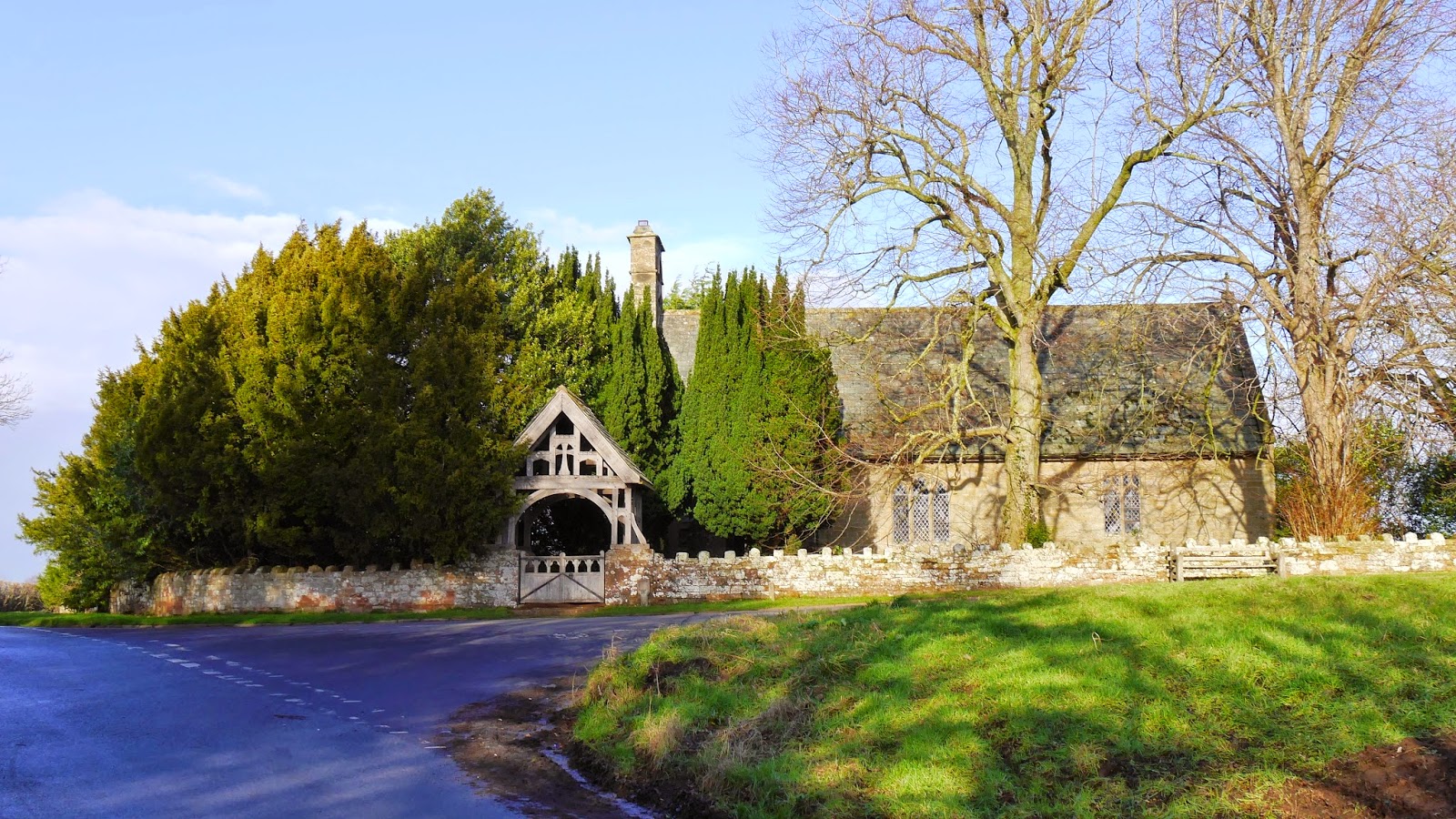
The Royal Oak Club Sandwich was just as good as the one I'd had at The Avenue in Bishopbriggs a couple of weeks ago, with the bread at The Avenue just shading it, but the chicken was more burnt and there was more on the plate at the Royal Oak, so I think an honourable tie. It's great to see a place providing good beer, interesting food & friendly service and I left just as The Royal Oak was filling up for a long lunchtime service. I really would have liked to head to The Ship Inn at Thursby (another recommended real-ale pub) which I had passed on the bus but that would have meant at least an hour's detour, so instead I headed due east down some more Cumbrian minor roads. At one intersection there was an interesting church...
...but I eventually left the farmland behind and started to head downhill towards the larger town of Dalston, the lower part of which is Buckabank. Just before I came to the River Caldew, and across from a large car salesroom, I found another large pub/restaurant, the Bridge End Inn.

All of the left-hand side of the building is setup for food, with a large conservatory restaurant and some other dining areas, but there's also a small bar area on the right-hand side, complete with large games room, pool table and sporting pictures. At the bar I found 2 hand-pulls, but the barmaid commented that only 1 is used during the winter months with Caledonian's Bitter Winter (really not that bitter) available today. I took a half pint of this in any case and chatted away to some of the locals at the bar about various pubs in Carlisle, but what I would really have loved to have done was to have thrown some of the hooped rope knots over the knot pole at the bar, but… I decided against it.

Since there was a Bridge End Inn it made sense there was a bridge somewhere nearby, in this case it was a stone bridge over the River Caldew…

…and this took me over the river and onto National Cycle Route 7, here sharing part of the Cumbria Way which connects Carlisle with Ulverston through the stunning Lake District National Park. Hopefully I'll head south at some point in the summertime but today I wanted to go north and this led me through the large industrial works of Ellers Mill and then back across the river (don't follow a path on the east side of the river bank, today it was extremely muddy and there is no way to get back across the river for miles).

I walked through the centre of Dalston (there's a Jennings pub here, The Bluebell Inn, but I didn't stop to look inside) and then back onto the signposted cycle-path which again led down to the River Cardew. Once past the huge Nestlé factory on the outskirts of Dalston (most of the branded Nescafé Cappuccino sachets sold in Europe are manufactured here) it's a nice riverside walk, with just the odd train appearing alongside the path (very close in some places) before the large Cummersdale Viaduct over the river.

Just past the viaduct I took the steep minor road up into the village of Cummersdale itself, checked the bus times in the square, and then decamped to the nearby Spinners Arms for some well-earned refreshment.

The last time I'd been here owners Alain & Alison had just launched the first of their in-house Carlisle Brewing beers which were not bad at all, but I was keen to try some more of them. When I entered the Spinners Alison was behind the bar (with Alain out cleaning inside the brewery) and I had just about enough time to try the 2 beers I hadn't seen before - the Oatmeal Stout (full of dark chocolate, very smooth, a decent body and a bitter coffee finish) and Magic Number (loads of sweet red fruits, a good body and a bitter-fruit finish - a very nice best bitter). These (and the Flaxen & Spun Gold) are really quite polished beers, having definitely improved since their initial launch. Alison also mentioned that they've started providing bottled beers, with the bottling sub-contracted (there's no space for it in the tiny brewery) and the labels (and associated pump-clips) now have a far more modern & distinctive appearance.

With only an hourly bus back to Carlisle, I decided to take that rather than start on a walk further downstream of River Cardew to Carlisle (which is very pleasant on a warm day). The Reays eco-bus dropped me off at Devonshire Street, and since the Moo Bar was all of 10 metres away, it wasn't a difficult decision to head on in there.

It doesn't seem to have changed too much (from a decor & seating point-of-view) since my last visit at the start of December, but from an event point-of-view they held a Fyne Ales tap takeover the week before and were running their first brewery visit (to Lancaster Brewery) in a couple of weeks’ time, definitely a good way to get people coming back. Although on this occasion there were a few hand-pulls off (probably the January effect), the beer choice was still impressive and I was able to try a couple of interesting keg (Arbor M-Bomb II and Hardknott Colonial Mischief) and Cumbrian cask (Cumbrian Legendary Pacific Voyage and Dent Golden Fleece) beers. The staff are quite happy to chat away here and when I asked the barman when the upstairs level was possibly scheduled to open to serve food he directed me to the far-away blackboard - fair enough.

On leaving the Moo Bar I did have a look around Carlisle Station for any sign of Moo Bar owner Nigel Tarn's latest venture, a craft ale bar and café called The Waiting Room planned to open on one of the platforms of the station (I guess a Carlisle Tap of sorts), but there wasn't any obvious sign of construction activity. Hopefully it'll be open the next time I’m down Carlisle-way.

Return travel:-
  Bus: Cummersdale (Square) to Carlisle Devonshire Street (75 Reays, 35 on the hour)
  Train: Carlisle to Glasgow Central (16:47, Virgin Trains)

Wednesday, 26 November 2014

Eden Brewery in Penrith and 2x Moos in Cumbria: 21st November 2014

I'd not been to the Cumbrian market town of Penrith for a couple of years (my previous trip is here), and had also been looking for an opportunity to visit the nearby Eden Brewery (not to be confused with the Eden Brewery/Eden Mill in Guardbridge, St Andrews) for a quite some time. With the very recent opening of a new craft-beer/real-ale orientated Moo Bar in Carlisle this seemed like to good time to visit the original Moo Bar in Penrith, drop in to see Eden Brewery and then have a look at this new Moo Bar 'up-the-road' in Carlisle.


Outward travel was as follows:-
  Train: Glasgow Central to Penrith (08:40 Virgin Trains - Advance to Carlisle and then Day Return Carlisle-Penrith was cheaper in this case)

Eden Brewery is located on the southern outskirts of Penrith and so when I left Penrith Station I first of all turned left past the Queen Elizabeth Grammar School buildings and then onto Wetheriggs Lane which took me south out of the town centre. I then found a narrow path through some playing fields before coming out at the A66 trans-Pennine route. This is a really busy road, connecting the M6 to the A1(M) but thankfully there are now traffic lights and a pedestrian crossing at the first roundabout from the M6. Navigating this took me into Eamont Bridge where a footbridge crosses the river alongside the old 15th Century single-lane arched bridge. There are a couple of interesting historical sites in Eamont Bridge, the first of which is known as King Arthur's Round Table.

This sadly has nothing (at all) to do with King Arthur, but is a pre-historic round earthwork somewhat destroyed by an adjacent road, however slightly further on is the seriously impressive Mayburgh Henge, a huge bowl-like henge with a high cobblestone bank and a large standing stone set in the very centre.

The bank is up to 15 feet high, is close to 400 feet in diameter and made up from 5-million+ cobblestones taken from the nearby rivers. The single stone monolith is 9 feet high (there were meant to have been another 3 of these) with the whole place having the imposing feel of a huge dawn-of-history amphitheatre - definitely well worth a visit.

I then back-tracked to the main road, this time crossed the River Lowther and went into up the hill to the Brougham Hall estate buildings. There is an access road all the way around the walls but the direct route through the (extremely) low entrance arch in the larger wooden door is far more entertaining.

Inside the large walled courtyard there are a number of small arts, crafts & leisure businesses and workshops (including Café Eden, specialising in home-made food & lovely cakes) but nestling at the far end were a number of tell-tale casks (and also a ton of malt on a pallet) indicating the location of Eden Brewery (and I think that's a pot-plant in a brewing vessel out there!).

The main brew-house is in the centre of the 3 units that Eden now occupy, with the admin and partial stores areas upstairs above the brewery floor (actually really quite high above the brewery floor).

Upstairs were head brewer & co-owner Jason Hill, with new recruit Linda Stanton (ex-UK/Commonwealth pole-vault record holder in a previous life!) in the midst of sparging a new brew in the mash-tun. Along with co-owner Steve Mitchell and delivery man/driver Tony, Eden are still pretty small, having started off operations in late 2011 with the first beers produced in the spring of 2012. Having found the large Brougham Hall premises they decided to change plans from a 1BBL plant to 5BBL and haven't really looked back since, adding a couple of 10BBL fermenters with the help of a Rural Development Programme grant in late 2013. Jason was then kind enough to take an hour out from his busy schedule and show me around the brewery setup. The rear of the original building still contains the main brewing kit - the Hot Liquor Tank, and the 5BBL mash-tun and copper.

The wort is then pumped through the heat exchanger to an adjacent room where the fermenters are located. These are mostly 5BBL vessels but the 2 new 10BBL fermenters are also located here; when these are being used it's normally a double brew-day, pitching the yeast at the end of the 2nd brew, which means a long 14 hour day for the guys. Although hop flowers are solely used in the main brewing process in some cases the beer is 'dry-hopped' by liquidised hop pellets in the fermenters, just to give an added depth of flavour and bitterness.

Cask beer is then racked off and stored in a temperature controlled out-building (along with all the cask samples), whereas bottled and kegged beer is sent off to their local sub-contractor. In some cases the beer for bottling must be over-hopped/'flavoured' since the cold-filtering does seem to strip away some of the intensity, but Jason thinks he's now got that right for most of the Eden beers.

Most bottles are delivered back for packaging and onward shipping with another adjacent unit being used to store all of these. Jason indicated that 'at some point' there will be a brewery tap in here but this is still very much in the early planning stages (outside tables here on a sunny day would make this a great place to drink some fresh, local beer).

It's an interesting (and extensive) range of beers that Eden now produce. From 'traditional' core beers such as Eden Gold (their best seller), Best, Fuggle and Emperor IPA (full of spicy English hops), Route 66 (ha!), a true bottom fermented kegged lager (really smooth with a bitter kick - hooray!), to some newish 'craft beers' full of US, New Zealand and European hops (although Jason has been using most of these hops before) that can be cask or keg and, quite recently, a number of branded beers for the wonderful Tebay Services on the M6 (easily the best Motorway Services in the country). In addition Eden have been producing their 'Withnail and I' themed beers since November 2013 (I think I must have bought one of the first gift-packs). The film was shot on location in Cumbria, in part just up the River Lowther from Eden Brewery, and with this being one of Jason's and Steve's favourite films, they thought - why not ? (The beer names associated with the film and the film quotes work well too - 'I demand some booze' etc...). Currently 7 beers are in the range (with another 'interestingly named' beer coming next year) comprising such diverse beers as those below (Antifreeze is included in the now infamous Best of British Beer Christmas Tree Advent Calender)...

...as well as Black Jake (a fantastic Seville Orange porter tasting of dark chocolate jaffa cakes), Scrubbers (a very light coloured US pale ale) and Terrible C (with a spicy green chilli kick at the end). Jason has definitely made some interesting and very tasty beers here, and knows what he wants - sessionable beers, but that doesn't have to means 4 pints in a row, just 2 or 3 bottles to savour at a time is fine, as something new will always be picked up. Many thanks to Jason for the look around and the great chat and I departed with a couple of Eden beers (and had brought down an Alechemy one for Jason), leaving Brougham Hall through the wooden door (again) before walking through the remainder of the Brougham estate to the moor road out of Penrith. Just where the rivers Eamont and Lowther meet are the ruins of Brougham Castle, standing guard over the rivers and (when open) there must be great views down the river valleys from the top of the still accessible castle keep.

I then turned back towards Penrith, found an underpass under the busy A66, and walked up a fairly steep incline into the Carleton Village area of Penrith. At the top of the hill is The Cross Keys, located where a number of paths from England and Scotland used to meet.

I headed into the main bar at the front left of the building and found a light wooden central bar supported by masses of bricks, with the interior full of exposed stone walls, low ceilings and some fantastic gnarled wooden support columns.

There were 2 beers on hand-pull that I could see, one from nearby Tirril Brewery and Merlin's Oak from Brains (a malty & sweet honey beer that I'm quite partial to), so I ordered a pint of the latter and some food, and sat down at one of the tables dotted around the windows of the bar. There is a cracking, slightly sunken games room adjacent to the bar (with a pool table and darts board) and the owner was quite happy to show me the large restaurant upstairs - this is almost medieval banqueting room in build and scope with a huge wooden canopy, flickering candle lights, an outside balcony and large windows giving a fantastic view over the river valleys & hills (but I couldn't really take a photo - damn!). I was shepherded back to the bar where my food was almost ready - a nice tuna-mayo sandwich & salad with some chips (hey, it was cold out there and these were piping hot).

Happily fed I headed out of The Cross Keys as the place was starting to fill up with Friday lunchers and walked further up Carleton Road and then towards the town centre of Penrith. Just before the actual market square is the tastefully understated frontage of Moo Bar, which used to (in the 19th Century) house & shelter various types of cattle bound for the nearby market (and hence the name).

The front bar is fairly small and basic, with a couple of wooden tables opposite the bar, bench table seats on the other side and some seats at the bar. But the beer choice at the polished mahogany bar was excellent - 6 hand-pulls (mostly from Cumbrian breweries, though it was great to Cromarty's lovely Red Rocker there as well) & 4 interesting kegged beers/ciders and there were lots & lots of bottled (and canned) craft beer in the fridges. I went for 3x 1/3rds of AAA by Fell Brewery, Esthwaite Bitter by Cumbrian Legendary and Obsidian by The Hop Studio, the latter a seriously good roasty, bitter (and thin) Black IPA, just what it should be.

They do live music downstairs at weekends and there's a lot more space & seating upstairs with a plenty of comfy seats, the odd beer barrel table and a wide screen TV showing mostly sport on one of the walls (I think upstairs has been nick-named the Udder Room - ouch!).

The Moo Bar was conceived and is owned by Nigel Tarn, who already part-owned a couple of eating/drinking establishments in Penrith and who had sold a drinks business (Turbo Drinks) for a more than decent sum in 2012 (he's also a beer writer with a couple of books published, nice to see). After opening in early 2013, Moo Bar Penrith seemed to be working out very well and Nigel applied to have a premises in Carlisle developed into a similar concept, and with this now open I headed back to Penrith train station to catch the next train to Carlisle (only 15 minutes away). Normally if I had to stop or change trains in Carlisle there was only the choice of a couple of Wetherspoons down Botchergate, but with the new Moo Bar Carlisle open on Devonshire Street, only 5 minutes from the station, it really is an easy decision to head there instead. Moo Bar Carlisle has a similar understated, but perhaps more elegant frontage in comparison to the Penrith premises...

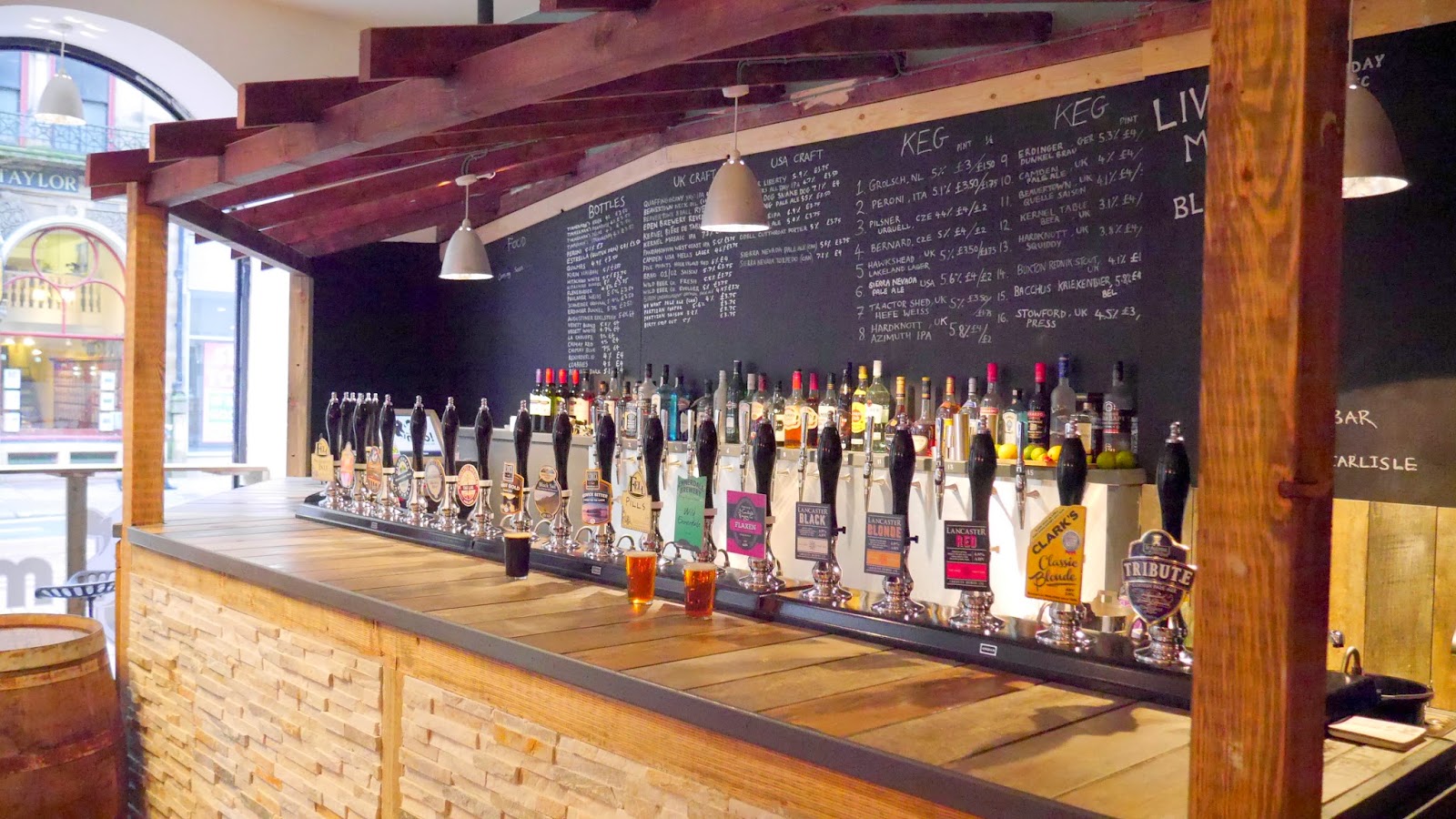
...but inside things are on a completely different scale. The sweeping, wooden canopied bar is the most obvious difference - it seems chock-a-block with evenly spaced hand-pulls, all 24 of them, with no space left on either side. There's no doubt that you are initially completely bamboozled by this amount of choice, so the best thing to do is either start from one side or ask the friendly bar-staff for some recommendations; I did both.

As in Penrith, the majority of the beers are Cumbrian (I knew some of them - Hardknott, Hawkshead, Stringers etc..., but not that many) and there have also been cask beers from Siren, XT, Arbor and others. And that list doesn't include the 16 shiny keg fonts at the back of the bar with Camden, Beavertown, Buxton, Tractor Shed, Bernard etc... beers available, and then add an even more extensive bottled & canned beer choice than in Penrith; there really is an impressive selection here, especially at £3.00/pint (cask) and £3.50-4.00/pint (keg). I took a number of 1/3rds (again) and sat down with a beery acquaintance for a chat and a look around the fairly large downstairs space. There are a lot of larger wooden tables & benches, this afternoon mostly occupied by a good range of people (young and old) trying out the beers (and it supposedly got really busy by the 5-o'clock (beer o'clock) Friday klaxon) and as with the Penrith bar there are some interesting features including a high throne-like wooden chair...

...and some sofa-seats, a huge mirror and cow-hide pouf cushion/seats at the back of the room.

I also liked the glass window in the floor through which you could see the casks being changed...

...but thankfully this wasn't quite as high as the Blackpool Tower glass floor I'd been to a couple of weeks previously.

It was almost all Cumbrian beers that I sampled in Carlisle and interestingly enough the revamped Carlisle Brewery Flaxen golden ale was the best brew I tried that afternoon, it certainly had a depth of orangey-lemon bitterness that had been slightly missing from some of their first-off brews last year. One thing that is missing from both of the Moo Bars is food, but the Carlisle Moo Bar also encompasses the upstairs floor, and plan to provide food to complement the beers; meat & cheese platters and other nibbles would definitely go down a storm here (and probably get you asking for another beer). Hopefully that should happen in the New Year and I'll certainly be back to give it a go. Carlisle as a beer destination ? Who would have thought it !

Return travel:-
  Train: Carlisle to Glasgow Central (16:02 Virgin Trains + many others)